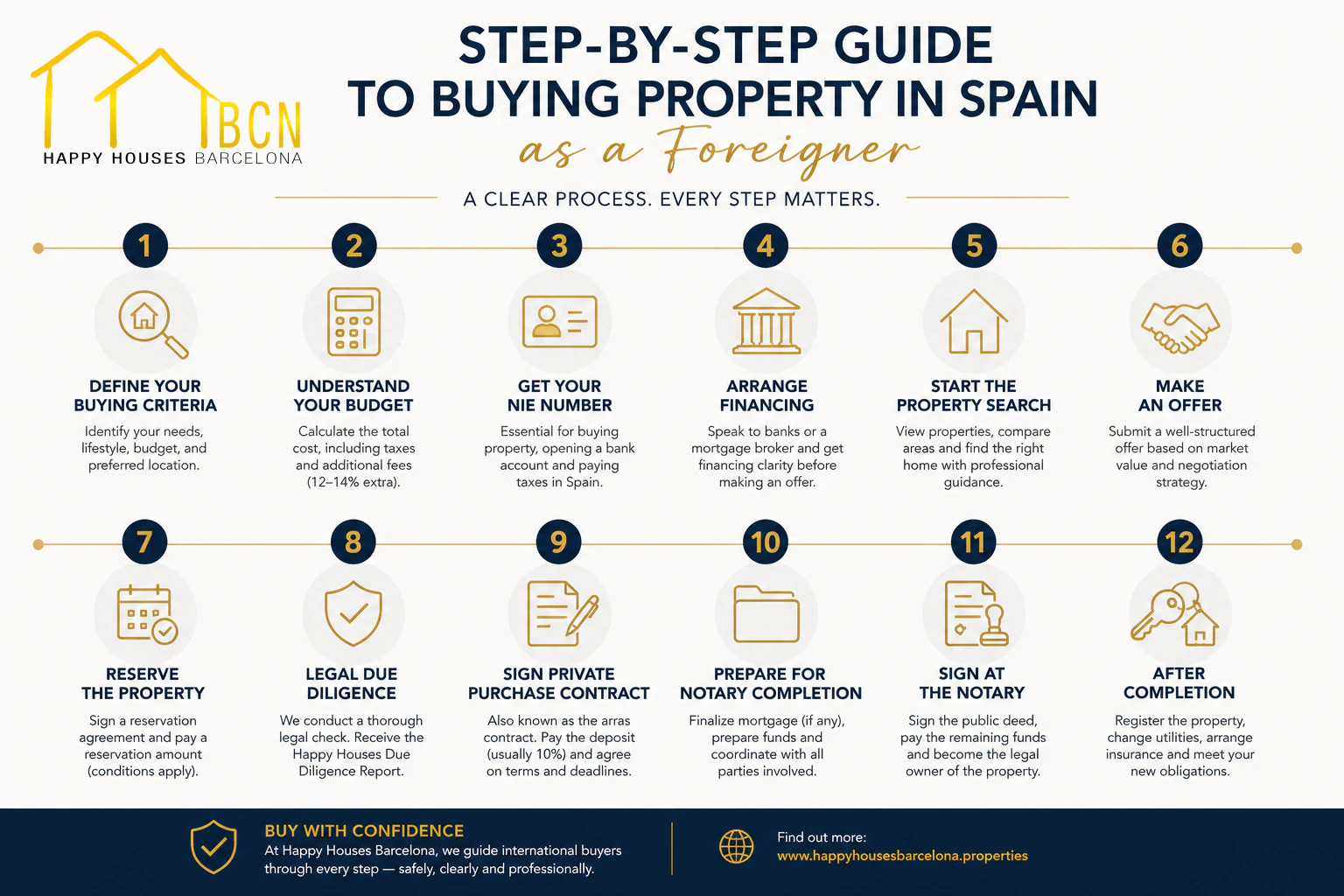
Step-by-Step Guide to Buying Property in Spain as a Foreigner
Buying property in Spain is an exciting step, whether you are relocating, investing, or looking for a second home in the sun.
The good news is that foreigners can buy property in Spain without major restrictions. However, the process is different from many other countries, and understanding each step before you begin can help you avoid stress, delays, and costly mistakes.
This guide explains the main steps involved when buying property in Spain as a foreign buyer.
1. Define Your Buying Criteria
Before viewing properties, it is important to clearly define what you are looking for.
Consider:
· Preferred location
· Budget
· Property type
· Number of bedrooms
· Outdoor space
· Distance to schools, airport, beach, or city centre
· Whether the property is for living, investment, or holiday use
Many international buyers start with a broad idea, but Spain has very different property markets depending on the area. Buying in central Barcelona is very different from buying in Sitges, Castelldefels, Gavà Mar, or a quieter inland village.
A clear brief saves time and helps avoid emotional decisions.
2. Understand the Full Purchase Budget
The purchase price is only part of the total cost.
As a general rule, buyers should budget approximately 12–14% extra on top of the purchase price for taxes, notary fees, land registry fees, legal checks, and other transaction costs.
For resale properties in Catalonia, the main tax is usually Property Transfer Tax. For new-build properties, VAT and stamp duty normally apply.
Understanding the full budget from the beginning helps you search within the right price range.
3. Get Your NIE Number
Foreign buyers need a NIE number to purchase property in Spain.
The NIE is a tax identification number for foreigners and is required for:
· Buying property
· Opening a Spanish bank account
· Paying taxes
· Signing at the notary
It is advisable to start this process early, as appointments and processing times can vary.
4. Arrange Financing Early
If you need a mortgage, speak to banks or a mortgage broker before making an offer.
Spanish banks may finance foreign buyers, but the conditions depend on your residency status, income, financial profile, and the property itself.
Having financing clarity before making an offer gives you a stronger position and avoids delays later.
If you are buying without a mortgage, you should still make sure funds can be transferred smoothly and on time.
5. Start the Property Search
Once your budget, location, and financing are clear, the property search can begin.
This stage often includes:
· Online research
· Viewings
· Comparing areas
· Reviewing property condition
· Checking asking prices against the market
For foreign buyers, it is especially important not to rely only on photos or listing descriptions. Property condition, legal status, community rules, and local context all matter.
This is where professional guidance can make a major difference.
6. Make an Offer
When you find the right property, the next step is to make an offer.
An offer should be based on:
· Market value
· Property condition
· Legal situation
· Seller motivation
· Comparable properties
· Timing and financing conditions
In Spain, negotiation is common, but it should be done carefully. A low offer without reasoning can damage the relationship with the seller, while an emotional offer can lead to overpaying.
A good offer is clear, justified, and structured.
7. Reserve the Property
If the seller accepts your offer, the next step is often a reservation agreement.
This usually involves paying a reservation amount to take the property off the market for a short period while contracts and legal checks are prepared.
Before paying any reservation, it is important to understand:
· Who receives the money
· Whether it is refundable
· Under what conditions it may be lost
· What deadlines apply
Never treat a reservation payment as a casual step. It should be clearly documented.
8. Legal Due Diligence
Before signing the private purchase contract, the property should be legally checked.
Due diligence may include:
· Confirming ownership
· Checking land registry information
· Reviewing debts, charges, or liens
· Verifying urban planning compliance
· Checking licenses
· Confirming community fees and obligations
At Happy Houses Barcelona, buyers who contract our Personal Property Search service receive the Happy Houses Due Diligence Report, prepared and signed off by our independent lawyer.
This report is designed to give buyers legal clarity before moving forward.
The due diligence report can also be contracted as an individual service for any property in Spain, even if you found the property yourself.
9. Sign the Private Purchase Contract
Once due diligence is complete and both parties agree on the terms, the private purchase contract is signed.
This is often called the arras contract.
The buyer usually pays a deposit, commonly around 10% of the purchase price, although this can vary.
The contract should clearly state:
· Purchase price
· Deposit amount
· Deadline for completion
· Conditions of the sale
· Consequences if either party does not complete
This is a legally important document and should be reviewed carefully before signing.
10. Prepare for Notary Completion
After signing the private contract, the parties prepare for completion at the notary.
This stage may include:
· Mortgage approval
· Final legal checks
· Transfer of funds
· Utility arrangements
· Coordination between lawyers, banks, agents, and notary
For foreign buyers, good coordination is essential, especially if you are not physically in Spain during every step.
11. Sign at the Notary
The final purchase is completed at the notary.
At the notary, the public deed of sale is signed, the remaining purchase funds are paid, and ownership is transferred.
After signing, the property is registered in your name at the Land Registry.
From this moment, you are the legal owner of the property.
12. After Completion
After the purchase, there are still practical steps to complete:
· Registering the property
· Changing utilities into your name
· Setting up community payments
· Arranging insurance
· Paying applicable taxes
· Organising keys, maintenance, or property management
This final stage is often underestimated, but it is important for a smooth transition.
Buying in Spain Can Be Simple — With the Right Guidance
Buying property in Spain as a foreigner is absolutely possible and can be a secure process.
The key is to follow the right steps, understand the legal and financial structure, and avoid rushing into decisions without proper checks.
At Happy Houses Barcelona, we guide international buyers through the full process — from defining the search to legal due diligence, negotiation, and completion.
Our goal is simple:
To help you buy safely, clearly, and with confidence.
If you are considering buying property in Barcelona, Sitges, Castelldefels, Gavà Mar, or elsewhere in Spain, feel free to contact us.
Useful Links
Contact form: https://www.happyhousesbarcelona.properties/en/contact/
Personal Property Search: https://www.happyhousesbarcelona.properties/en/personal-property-search/